
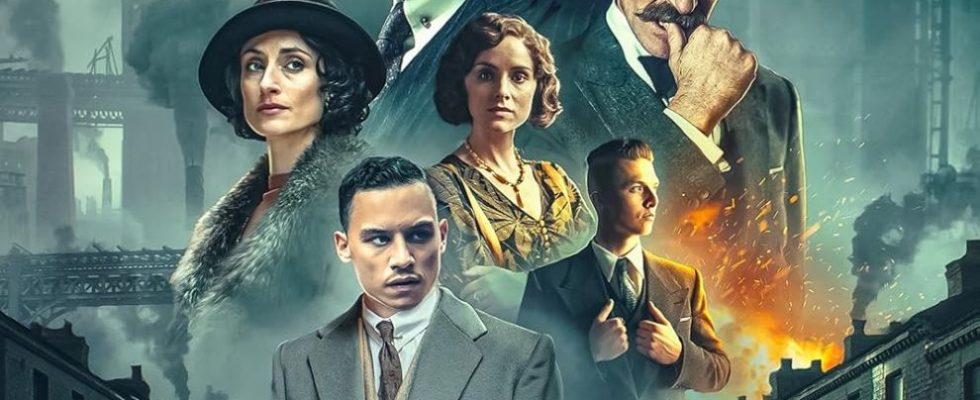
Let’s chat, folks! Today, we’re diving into the exceptionally slick noir of Peaky Blinders, a series that masterfully chronicles the rise of a Birmingham gang over six riveting seasons filled with sharp suits and sharper knives.
Advertisements
Peaky Blinders burst onto our screens on September 12, 2013, airing on BBC Two until its grand farewell on April 3, 2022. The show spanned 36 episodes clocking in about an hour each, crafted by the brilliant Steven Knight. Thanks to Netflix snatching up distribution rights, this British period crime drama became a cultural juggernaut, with its roots tracing back to a real-life gang that thrived in Birmingham from the 1880s to the 1920s, all set against the backdrop of post-World War I disarray.
What makes the series stand out isn’t just the treachery of the gang—though that’s a delightful bonus—it’s the way it weaves historical narratives about trauma, family loyalty, and ambition into its stylish tapestry. With its haunting soundtrack and stunning visuals, Peaky Blinders redefined what it means to be a prestige television show in the crime genre.
The Bloody Rise of the Shelby Clan
At the heart of this thrilling saga is a tale of a gangster family set in the tumultuous 1900s, revolving around the notorious crew who ingeniously sew razor blades into their caps, led by the fiercely intelligent Tommy Shelby. Starting as a gang with humble aspirations in Birmingham, this crew’s ambitions spiral into an empire filled with political maneuvering, legitimate business fronts, and a touch of international spice.
Peaky Blinders brilliantly highlights how the Shelby family’s criminal undertakings serve as both their claim to fame and their undoing. Each season ups the ante, shifting from neighborhood skirmishes to face-offs with global figures, including fascists and American mobsters. The show cleverly parallels the gang’s growth with Britain’s own evolution during the early 20th century, illustrating how ambition and violence shape not just individuals but entire nations.
Viewers are caught in a love-hate relationship with the Shelby family; their unwavering loyalty is admirable, though it often sidelines everyone else.
Tommy Shelby: The Genius with Demons
Cillian Murphy offers a tour de force as Tommy Shelby, a man deeply scarred by his World War I experiences. Tommy isn’t simply a criminal; he’s a strategic mastermind haunted by his past, channeling his trauma into an unquenchable thirst for power.
Over the series, we witness Murphy transform Tommy from a lowly bookmaker to a formidable political player, effortlessly straddling the line between the criminal underworld and respectable society. His journey is a masterclass of character development as we watch him grapple with PTSD, family ties, and morality while building an empire that may very well obliterate what he holds dear.
Murphy’s performance encapsulates the duality of Tommy’s brilliance and fragility, making him an irresistibly compelling character, even as his choices slide into morally murky waters. The role has rightfully won him colossal critical acclaim, solidifying his place among the TV elite.
The Power Players: Polly Gray and the Women of Shelby
Helen McCrory’s portrayal of Polly Gray, Tommy’s aunt, is a standout highlight of the show. As the backbone of the Shelby family, Polly combines formidable loyalty with a wisdom that often eclipses Tommy’s tactical brilliance.
The dynamics among the Shelby clan, especially between Tommy and Polly, fuel much of the series’ emotional core. Polly acts as Tommy’s closest confidante and sternest critic, always challenging him when his choices threaten the family’s stability.
The show also shines a light on other strong female characters like Grace Burgess, May Carleton, and Lizzie Stark, each portraying various dimensions of Tommy’s intricate web of relationships woven with love, power, and redemption. These women are not just side characters; they add depth to the narrative in profound ways.
The Final Showdown with Fascism
Without spilling the beans on the big reveals, Peaky Blinders leads to a gripping finale where Tommy confronts his ultimate nemesis: the rise of fascism threatening Europe. The final season adeptly interlaces personal vendettas with historical reality, exposing how the Shelby family’s illicit enterprises intersect with significant political movements.
The series conclusion gives Tommy’s narrative a poignant wrap-up while tackling the emotional toll stemming from his voracious quest for power. The finale doesn’t just tie up loose ends; it reshapes our understanding of the entire story arc, offering not just resolution but a deeper insight into the tragic consequences of ambition.
In the end, Peaky Blinders transcends the typical gangster narrative—it’s a tale of trauma, family, and the indelible marks left by history.
The Netflix Phenomenon
Peaky Blinders rose to extraordinary heights as one of Netflix’s crown jewels, captivating audiences globally with its chic storytelling. The series adeptly fuses historical accuracy with contemporary aesthetics, featuring a soundtrack that makes the 1920s feel strikingly relevant. Each episode, with its meticulous attention to detail, invites binge-watching with its irresistible pull. This popularity firmly established Netflix’s reputation for quality international content, proving British period dramas can capture hearts worldwide when they’re given the right platform.
A Must-Watch for Drama Buffs
If you’re a fan of period pieces filled with layered storytelling and complex characters, Peaky Blinders should be next on your watchlist. This tale from Birmingham packs the punch you expect from prestige television: stellar performances, breathtaking cinematography, and a storyline that intertwines intimate character arcs with sweeping historical narratives.
Why You Should Dive into This Crime Masterpiece
Highlights:
- Cillian Murphy delivers an unforgettable performance as Tommy Shelby.
- Impressive production design that authentically captures 1920s Birmingham.
- Intricate family dynamics elevate emotional engagement beyond just crime.
- A masterful mix of real historical events woven into gripping narrative.
- An outstanding supporting cast, with Helen McCrory’s Polly Gray stealing scenes.
Drawbacks:
- Some plotlines lose their clarity as later seasons unfold.
- The pacing can waver while it juggles multiple narratives.
- Dark themes and violence may deter casual viewers.
- A few character arcs feel rushed or neglected in the series’ concluding season.
- The stylish presentation occasionally prioritizes flair over narrative depth.
Peaky Blinders showcases that the best crime sagas are more than just tales of lawbreakers—they’re investigations into trauma, loyalty, and the ambitions that shape our existence through the ages.
Series Overview
- Total Episodes: 36 episodes over 6 seasons.
- Streaming Platforms: Netflix (for international viewers), BBC Two (original channel).
- Years of Release: 2013-2022.
- IMDb Score: 8.8/10.
- Genres: Period Crime Drama, Historical Fiction, Family Saga.
- Production Type: British series.
- Status: Completed (with a movie sequel in the works).
- Main Cast: Cillian Murphy (Tommy Shelby), Helen McCrory (Polly Gray).
- Antagonists: Various characters throughout the seasons (including Alfie Solomons, Luca Changretta, Oswald Mosley).