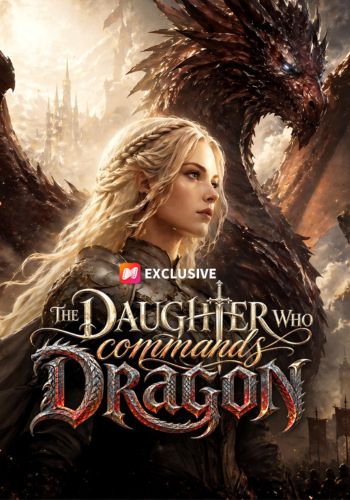

Born gifted. Denied everything. She came back with dragons.
Advertisements
41 episodes where a world that refused Eleanor a place in magic learns what she built without permission.
Eleanor was born with gifts that the world around her has no interest in honoring. The society she inhabits operates on a clear and enforced principle: magic belongs to men. Women of her world may be talented, perceptive, or capable of the same intellectual and instinctive qualities that make a great practitioner, but none of that changes the rule. Eleanor was born on the wrong side of a distinction that was made before she existed and that no one in her immediate world has any motivation to question. She watches what her gifts could become from a distance that the social order maintains carefully, and the frustration of that distance is not something she is allowed to express in a way that anyone will take seriously.
The cost of the world's rules does not stop at Eleanor's own denied ambitions. Her sister is given away to a brutal marriage, the kind of arrangement where the personal welfare of the woman involved is irrelevant to the transaction. Her mother is enslaved in an attempt to save Eleanor from the immediate consequences of being who she is in a world that does not want her to be it. The series establishes these losses early and without softening, because Eleanor's eventual return as someone the world cannot dismiss or control needs to be proportional to what was taken from her before the story began. The audience needs to understand the full weight of the debt before watching it collected.
The Archmage who takes Eleanor does not arrive as a villain. He is a hidden figure, someone who exists outside the ordinary structures of the world she was living in, and whose perception of what Eleanor actually carries is different from everyone else she has ever encountered. Under his instruction, she does not simply learn magic. She accesses something the system she came from never classified as available to her, something older and more specific than the ordinary practice she was denied. The dragons she eventually commands are not a prize she is handed. They are the product of a development that happened in a place removed from the society that refused her, under conditions that the society that refused her does not know are possible.
The world Eleanor comes from does not stay still while she is gone. The house she belonged to suffers. The structure that believed its rules were sufficient to maintain order discovers that rules enforced through exclusion leave the people they exclude with no reason to protect what the rules were built to guard. When Eleanor returns, the visual language the series deploys is precise about what has changed: the heir of the house that denied her is kneeling. That image is not accidental or incidental. It is the series' central promise, delivered in the official synopsis and earned across 41 episodes of accumulation. She did not come back to negotiate or appeal. She came back to demonstrate what the world built against her made possible by building against her.
The arena battle sequence that appears in the series' later episodes is the visual centerpiece that spread across short drama clip compilations within days of the series launching. The confrontation between Eleanor's blue lightning and the red energy of the villain with the glowing eyes represents a specific production choice about where to concentrate visual effects resources. That opposition, blue against red, is not purely aesthetic. It maps onto the series' moral architecture: Eleanor's power was awakened through patience and discipline in snowy mountains removed from the world's cruelty, while the antagonist's red energy carries the visual language of something that operates through force and violation. The arena is where those two different histories of power meet in direct contact.
For NetShort's 2026 fantasy female empowerment catalog, this series occupies a specific lane that the platform has been developing with increasing visual ambition. The combination of snowy mountain cinematography, the glowing horse visual in the final sequences, and the white wolf summoning scene represents a production investment in signature moments that function as both episode hooks and standalone shareable content. At 41 episodes, the series is compact enough to maintain the narrative pressure the female empowerment genre requires without the padding that stretches longer titles. Eleanor's arc from denied girl to dragon commander is told without apology, without a redemption offered to the people who caused her losses, and without a resolution that asks her to be grateful for the difficulty that made her.
Diana Foster is an entertainment writer specializing in action-romance hybrids and digital platform storytelling. With a background in genre fiction analysis, she covers the growing intersection of adrenaline-driven plots and romantic arcs in short-form series. Her reviews focus on pacing, production value, and what makes mobile-first content irresistible to global audiences.
The content on this page is published for informational and entertainment purposes only. All intellectual property rights associated with The Daughter Who Commands Dragon, including its story, characters, title, and all related creative elements, belong exclusively to the original production team and the NetShort platform operated by NETSTORY PTE. LTD. Viewers who wish to watch the complete series are encouraged to access it through NetShort's official app or website, where the creative team receives proper attribution and compensation for their work. This site operates as an independent review and recommendation platform for short drama audiences and holds no affiliation with NetShort or any party involved in producing this title. All reviews and articles published on this site are free to read. No payment, subscription fees, or personal financial information are ever required to access our content. We do not host, stream, distribute, or store any copyrighted video material. Our purpose is to help audiences find quality short drama content through honest, specific critical writing. To watch the full series and support the people behind it, please visit NetShort through their official channels.