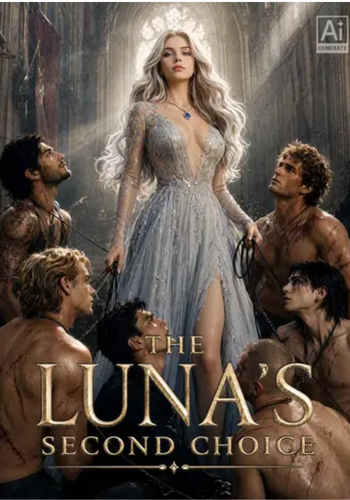

He chose Katherine over his fated mate. He only learned the truth from Scarlett's diary.
Advertisements
After the Soul Fire Ritual destroyed her, Edward discovered he had killed the woman who saved him.
Edward is a powerful Alpha who has already made his decision before the series spends much time building toward it. He plans to reject his fated mate and make Katherine his Luna instead. That decision is not made from malice. It is made from a belief he holds with complete confidence: Katherine is the woman who saved his life, and loyalty to the person who saved you is the kind of obligation that overrides the supernatural bond the werewolf world assigns at birth. His fated mate, Scarlett, does not fit the story he has constructed about what he owes and to whom he owes it. He has a narrative, he has a plan, and he is prepared to execute both regardless of what the mate bond's existence implies about the choice he is making.
The Soul Fire Ritual is the mechanism through which Edward's plan intersects with its consequences. The ritual is deadly, and Scarlett endures it. What happens inside that sequence is not simply Scarlett's physical destruction. It is the full exposure of the gap between what Edward believed and what was actually true, delivered at the worst possible timing: after the irreversible damage has been done. The series does not rush to the reveal. It builds the ritual's weight across the preceding episodes so that when the truth arrives, it arrives carrying everything that came before it. Edward's confidence in his own narrative is precisely what made the ritual possible, and that confidence is exactly what the diary dismantles.
Katherine lied to him. The lie was not a small misrepresentation or an embellishment that a reasonable person might excuse. It was the foundational claim that organized Edward's entire system of loyalty and obligation. Scarlett was the real one who saved him. Katherine constructed a version of events that placed herself in Scarlett's role, which means every decision Edward made on the basis of that version, every rejection of his fated mate, every public alignment with Katherine over Scarlett, every moment where Scarlett absorbed the consequences of being classified as the less important person, was built on a deliberate theft of credit. The diary does not just correct the record. It shows Edward the full shape of what the lie cost.
Scarlett's diary is the series' most structurally precise choice. She could not tell him the truth while she was alive, which the series establishes through the specific conditions of her position: a fated mate who was being rejected in favor of another woman, without the standing to make accusations that would be believed against Katherine's established narrative. The diary is what she could do, which was to leave a record that tells the truth after she is no longer available to be dismissed. The series uses that posthumous communication not as a plot convenience but as a statement about what it means to be heard only after you are gone. Edward receives the truth from a woman he can no longer apologize to, and the weight of that specific sequence is what drives the second chance arc.
The question the series builds its final act around, whether fate will give Edward a second chance to redeem himself, is the one that the werewolf genre's second chance romance structure was designed to answer. But this series approaches that question with more damage beneath it than most second chance arcs carry, because the redemption Edward needs is not simply from a mistake made under false information. It is from a pattern of choices that prioritized his own certainty over his fated mate's reality, choices that the lie made possible but that Edward's unwillingness to question his own narrative made operational. The series is not simply asking whether fate is generous. It is asking whether Edward is someone who deserves generosity, and what he would have to become to be that person.
For ReelShort's 2026 werewolf romance catalog, this series occupies a position that the platform's second chance romance category has not frequently explored: a male lead whose error is not simply being deceived, but being the kind of person whose certainty made the deception sustainable. Most second chance werewolf dramas place their Alpha in a position where the audience can sympathize with his original choice because the deception was convincing. This series asks the audience to hold both things simultaneously: Katherine's lie was the structural cause, and Edward's confidence in his own narrative was the condition that made the lie work. That dual responsibility is what gives the diary scene its weight and what makes the second chance arc genuinely earned rather than simply delivered.
James Calloway covers suspense and thriller content in the short drama space, with a focus on how vertical storytelling creates tension in compressed formats. He has spent years analyzing how creators build dread, plot twists, and high-stakes narratives within episodes that last just a few minutes.
The content on this page is published for informational and entertainment purposes only. All intellectual property rights associated with The Luna's Second Choice, including its story, characters, title, and all related creative elements, belong exclusively to the original production team and the ReelShort platform. Viewers who wish to watch the complete series are encouraged to access it through ReelShort's official website or mobile application, where the production team receives proper attribution and compensation for their work. This site operates as an independent editorial platform for short drama audiences and holds no affiliation with ReelShort or any party involved in producing this title. All reviews and articles published on this site are free to read. No payment, subscription fees, or personal financial information are ever required to access our content. We do not host, stream, distribute, or store any copyrighted video material. Our purpose is to help audiences find quality short drama content through honest, specific critical writing. To watch the full series and support the people behind it, please visit ReelShort through their official channels.